


Companies still slow to fire and slow to hire
The number of open jobs roughly matches the number of unemployed workers
5 min read
KEY POINTS
- The labor market has normalized from pandemic extremes, with job openings now roughly matching the number of unemployed workers.
- Weekly jobless claims remain historically low, signaling a “low-fire” environment where companies are reluctant to cut staff.
- Rising continuing jobless claims point to slower hiring, reinforcing a “low-fire, low-hire” dynamic despite solid job growth and stable unemployment.
The first week of each month provides us with a plethora of data around the employment market. Since the U.S. consumer is the biggest part of the economy, “employment week” is arguably the biggest week of data per month.
The Job Opening and Labor Turnover Survey (JOLTS) comes out first and is always a month in arrears. The JOLTS data for April, which was released June 2, showed an increase in the number of open jobs which now roughly equates to the number of unemployed persons in the U.S. labor force.
Over the last few months, this indicator has shown a more balanced labor market than during the pandemic—when we had, at one time, twice as many open jobs as unemployed persons. While that period may have been great for workers and another data point, the “quits ratio” was very high, indicating a lot of people changing jobs. It was a very difficult period for companies to retain talent, and wage pressures were high. These higher wages played a key part in the increase in inflation which led to aggressive tightening by the Federal Reserve. A more balanced labor market is allowing the unemployment rate to stay low while keeping wage related inflation pressures under control.
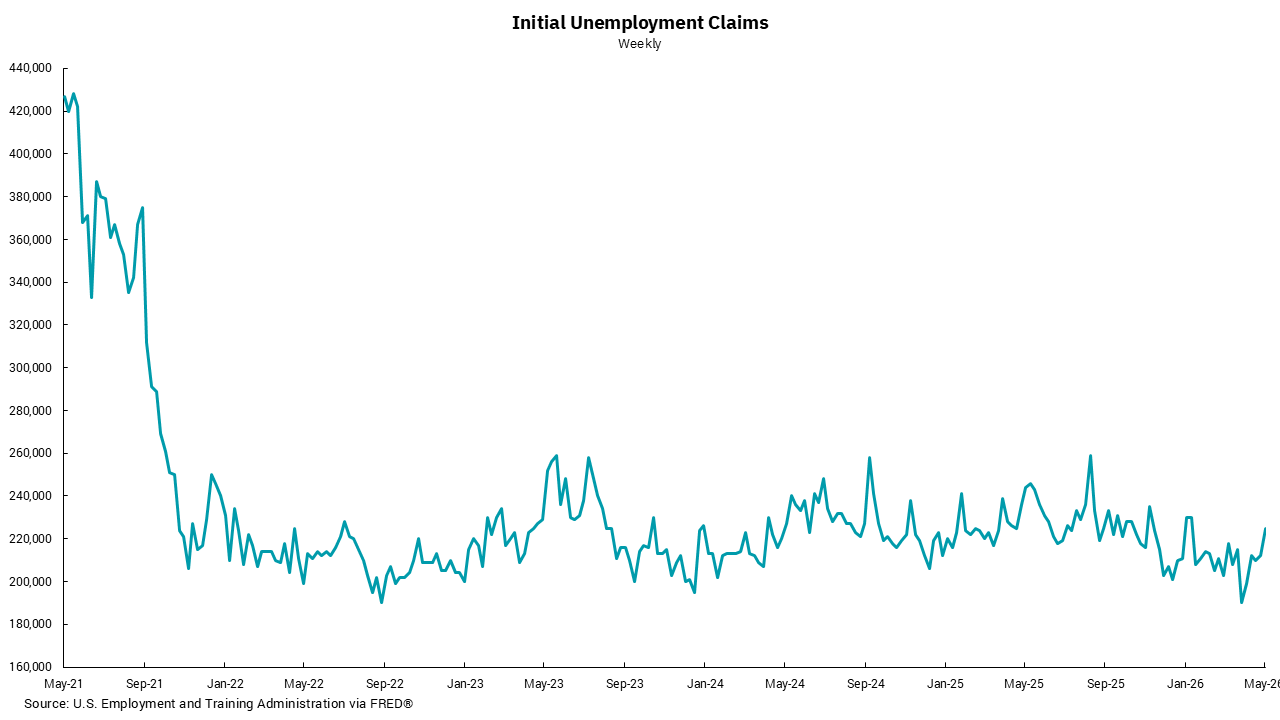
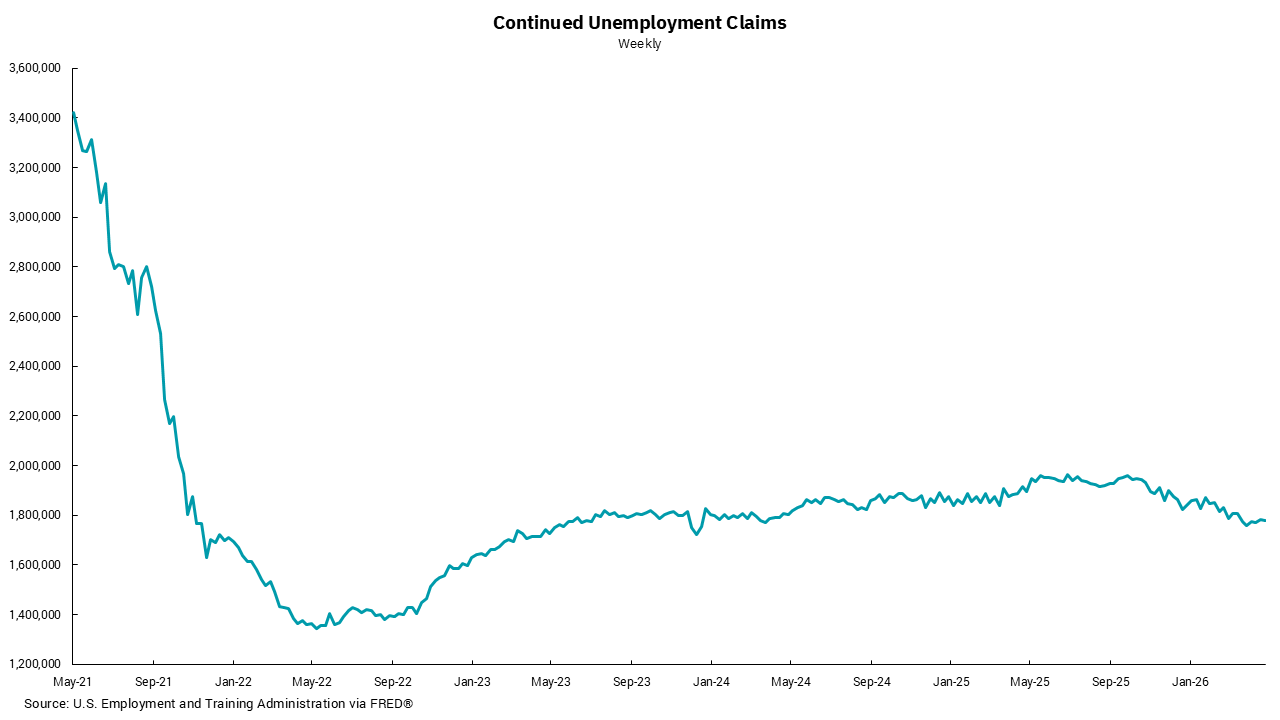
With all that in mind, our charts this week show an employment data series that comes out weekly: initial jobless claims and continuing unemployment claims. While related, they provide insight into the job market in different ways, and their weekly release gives us as close to “real-time” data as we can get on the job market. The initial claims part of the release shows the number of workers who are filing for initial jobless benefits. These are workers who have been laid off, not quit of their own volition nor fired with cause, and are eligible for benefits. Recall early in the pandemic when one of the first actions of Congress was to pass legislation which included an unemployment benefit bonus as the headline unemployment rate soared to 15% and weekly jobless claims were over 2 million a week. Since then, weekly jobless claims have declined and are now running at a pace of around 200,000 a week, a level last seen in the 1960s. From this data, we would say we remain in a “low-fire” environment, as companies seem loathe to reduce employee levels.
The continued claims chart gives us an idea of how long people remain unemployed once laid off. Note that during the pandemic continuing claims were very low because unemployed people could readily find other work. However, over the course of 2025 and into 2026, continuing claims were rising, indicating that people that had been laid off were having a more difficult time finding work. This led to the idea of “low hire” in the job market. Combined, we have described the job market as low fire/low hire.
The last piece of data we get is the monthly report on the overall job market from the Bureau of Labor Statistics (BLS). For the month of May, new job growth was much higher than expected at 172,000, while the headline unemployment rate remained stable at 4.3%. In addition, the prior two months’ jobs numbers, which were already higher than initially expected, were revised upward even more. Taken in conjunction with JOLTS and weekly jobless claims numbers, it appears the job market is firming even as the conflict in Iran spurs price pressures on energy and increases some levels of uncertainty. Kevin Warsh may not be able to lower rates as the new Fed Chair, but thankfully, the bigger parts of core inflation like wages and rents, may mean he doesn’t have to raise rates in the short term either.
Get By the Numbers delivered to your inbox.
Subscribe (Opens in a new tab)